

Morton's Neuroma: Causes, Symptoms, Treatment, and Recovery — Foot & Ankle Sports Medicine Specialist in North Texas

That sharp, burning pain in the ball of your foot — the feeling of standing on a pebble or having your sock bunched up — could be Morton's neuroma. This common nerve condition affects thousands of active people every year and is the second most common compressive neuropathy in the body, behind only carpal tunnel syndrome. The good news: most cases respond to non-surgical treatment, and when surgery is needed, outcomes are excellent.
With offices in McKinney and Flower Mound, Dr. Sarang Desai provides expert diagnosis and treatment of Morton's neuroma for athletes and active individuals across Allen, Frisco, Plano, Prosper, and the greater Dallas-Fort Worth area.
What Is Morton's Neuroma?
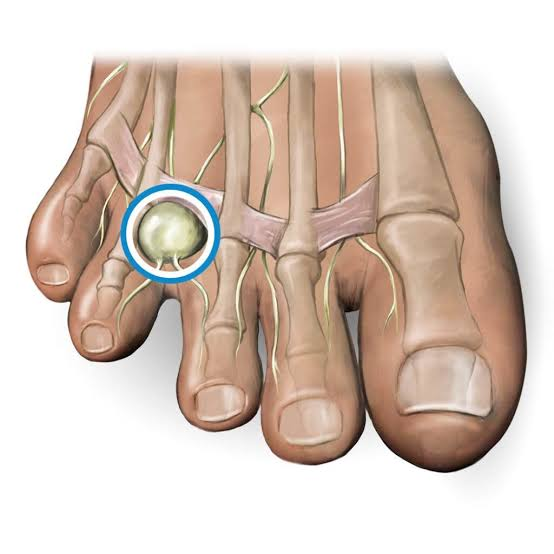
Morton's neuroma is not actually a tumor. It is a thickening and fibrosis of the tissue surrounding a common plantar digital nerve in the forefoot — the nerve that runs between the metatarsal heads and provides sensation to the toes. Over time, repeated compression and irritation cause the nerve sheath to thicken with perineural and epineural fibrosis and decreased myelination, creating a painful, enlarged mass.
The condition most commonly affects the third intermetatarsal space (between the third and fourth toes) in up to 87% of cases, followed by the second intermetatarsal space. It occurs bilaterally (in both feet) in approximately 21% of patients.
Morton's neuroma is far more common in women than men, with a ratio greater than 4:1 among patients who undergo surgical excision. Symptomatic cases have been reported at rates of 88 per 100,000 in women and 50 per 100,000 in men. Patients typically present between 45 and 54 years of age, though athletes can develop symptoms at any age.
What Causes Morton's Neuroma?
Morton's neuroma develops when the common plantar digital nerve is repeatedly compressed, stretched, or irritated as it passes between the metatarsal heads. The nerve becomes trapped beneath the deep transverse intermetatarsal ligament — a band of tissue that connects the metatarsal heads — and chronic irritation leads to progressive fibrosis and enlargement.
Common causes and risk factors include:
- Tight, narrow, or high-heeled shoes — constrictive footwear squeezes the metatarsal heads together, compressing the nerve. High heels shift body weight onto the forefoot, increasing pressure. Among patients undergoing surgery for Morton's neuroma, 86% report worsening pain with tight shoes
- Repetitive forefoot loading — running, jumping, and activities that place the metatarsal arches in excessive hyperextension repeatedly compress the nerve. This is why Morton's neuroma is commonly seen in runners, basketball players, tennis players, and dancers
- Foot deformities — bunions (hallux valgus), hammertoes, flatfoot, and high-arched (cavus) feet alter forefoot mechanics and increase nerve compression
- Achilles tendon tightness — a tight Achilles tendon (equinus contracture) forces more weight onto the forefoot during walking and running, increasing pressure on the intermetatarsal nerves
- Previous foot injuries — ankle sprains or stress fractures that alter gait mechanics can shift loading patterns and predispose to neuroma development
- Gender — women are affected more than 4 times as often as men, likely related to footwear choices and anatomic differences
- Sports participation — athletes who place their metatarsal arches repetitively in excessive hyperextension are at particular risk
Symptoms of Morton's Neuroma
Morton's neuroma produces a characteristic set of symptoms that typically worsen with activity and tight shoes, and improve with rest and shoe removal:
- Burning pain in the ball of the foot — the hallmark symptom, typically localized between the third and fourth toes (or second and third toes)
- Numbness or tingling in the toes — the affected toes may feel numb, tingly, or have "electrical sensations"
- Feeling of standing on a pebble or marble — many patients describe the sensation of having something inside the ball of the foot
- Pain that radiates to the toes — burning or shooting pain that extends from the ball of the foot into the two adjacent toes
- Pain worsened by walking — 91% of surgical patients report exacerbation with walking
- Pain worsened by tight shoes — 86% report worsening with constrictive footwear
- Pain relieved by rest — 81% report improvement when off their feet
- Pain on stretching the toes — 79% report pain when the toes are spread or extended
- No visible lump — unlike a bunion, Morton's neuroma typically has no visible external deformity
For athletes: Symptoms often first appear during or after high-impact activities — running, jumping, cutting, or pushing off. Runners may notice burning in the forefoot during longer runs. Basketball and tennis players may feel sharp, shooting pain during lateral movements. Dancers may experience numbness in the toes during relevé or pointe work. If forefoot pain is causing you to alter your stride or avoid activities, it's time to get evaluated — compensatory gait changes can lead to secondary problems like plantar fasciitis, Achilles tendinitis, or stress fractures.
How Is Morton's Neuroma Diagnosed?
Morton's neuroma can typically be diagnosed based on clinical history and physical examination alone — among patients who undergo surgery for clinically diagnosed Morton's neuroma, 97.5% have histologically confirmed disease, demonstrating the high accuracy of clinical diagnosis.
Physical examination findings:
- Thumb-index finger squeeze test — tenderness on direct compression of the affected webspace between the thumb (plantar) and index finger (dorsal)
- Mulder sign — a palpable and sometimes audible "click" produced by compressing the metatarsal heads together while simultaneously pressing on the affected interspace from the plantar side. This is the most well-known clinical test for Morton's neuroma
- Tinel sign — tapping over the affected intermetatarsal space reproduces the burning or tingling symptoms
- Webspace sensory testing — decreased sensation in the affected webspace compared to the unaffected side
Imaging:
- X-rays — standing foot radiographs are typically obtained first to rule out other conditions such as stress fractures, metatarsal head avascular necrosis, or arthritis. X-rays do not show the neuroma itself but help exclude other diagnoses
- Ultrasound — the preferred initial advanced imaging study. Ultrasound identifies a hypoechoic (dark) mass at the metatarsal heads with a sensitivity of 91% and specificity of 85%. It is quick, performed in the office, does not involve radiation, and can also be used to guide injections. However, accuracy depends on operator experience and technique
- MRI — provides excellent soft tissue detail with a sensitivity of 90% and specificity of 100%. MRI is used when clinical diagnosis is not conclusive, when ultrasound is equivocal, or when surgical planning requires detailed anatomic information
There is no significant difference in diagnostic accuracy between ultrasound and MRI, so the choice depends on availability, clinical context, and whether injection guidance is needed.
Treatment for Morton's Neuroma
Non-Surgical Treatment (First-Line for All Patients)
The majority of Morton's neuroma cases respond to conservative management. First-line therapy consists of activity modification, shoe changes, orthotics, and — when needed — injection therapy.
Shoe modifications:
- Wide toe box shoes — the single most important change. Shoes with a wide, roomy toe box allow the metatarsals to spread out, reducing nerve compression. This is the foundation of all Morton's neuroma treatment
- Avoid high heels — high-heeled shoes shift weight onto the forefoot and compress the metatarsal heads together
- Increased cushioning — shoes with extra forefoot cushioning reduce impact on the nerve
- Low-heeled shoes — keeping the heel height below 1 inch reduces forefoot pressure
Orthotics and metatarsal pads:
- Metatarsal pads — small dome-shaped pads placed just behind (proximal to) the metatarsal heads. They spread the metatarsals apart and lift the transverse arch, taking pressure off the nerve. These can be placed inside any shoe and are often the most effective simple intervention
- Custom foot orthoses — in a randomized trial, custom insoles with longitudinal arch support and metatarsal support reduced pain scores from 5.8 to 2.7 over 24 months, significantly better than flat insoles (6.1 to 4.7; P = .048)
- Prefabricated neuroma pads — over-the-counter insoles with built-in metatarsal support can provide relief for many patients
Activity modification:
- Reduce or temporarily avoid high-impact activities that worsen symptoms (running, jumping, court sports)
- Cross-train with low-impact activities (swimming, cycling) that don't load the forefoot
- Gradually return to activity as symptoms improve, using appropriate footwear and orthotics
Injection therapy (when conservative measures are insufficient):
- Corticosteroid injection — provides short-term pain relief (1 week to 3 months). A randomized trial of 131 patients showed that methylprednisolone injection improved foot health scores at 3 months compared to local anesthetic alone (mean difference 14.1 points; P = .002). However, corticosteroid success rates range from 11% to 47%, and overuse carries risks of plantar fat pad atrophy and joint subluxation. Ultrasound-guided injections are more effective than non-guided injections, with significantly better pain reduction and patient satisfaction
- Alcohol sclerosing injections — a series of 3–7 ultrasound-guided injections of dilute alcohol (4% ethanol) administered at 5–10 day intervals. This technique chemically destroys the neuroma tissue. Studies report 84–94% of patients achieving partial or total symptom improvement, with 82–84% becoming completely pain-free. A large study of over 500 patients showed 74.5% satisfaction at 1 year. Alcohol injections offer results comparable to surgery with less morbidity and can be performed in the office
- Radiofrequency ablation — a newer minimally invasive option that uses heat to destroy the nerve. Studies show significant pain reduction with a low complication rate (3.7% vs. 13% for surgery), though 26% of patients may eventually require surgical excision and 33% may need repeat ablation
Cost-effectiveness: A cost-utility analysis found that a trial of ultrasound-guided injection therapies (steroid followed by alcohol injections if needed) before considering surgery is the most cost-effective strategy, yielding an incremental cost-effectiveness ratio of $4,401.61 per quality-adjusted life year compared to no treatment.
Surgical Treatment (When Conservative Management Fails)
Approximately 30% of patients do not respond adequately to conservative treatment and may require surgery. If pain is severe or not relieved after 6 weeks of conservative management, surgical referral is warranted.
Neurectomy (nerve excision):
The standard surgical treatment is excision of the affected common interdigital nerve (neurectomy). The procedure involves removing the thickened, fibrotic segment of nerve along with the neuroma. It can be performed through either a dorsal (top of foot) or plantar (bottom of foot) approach:
- Dorsal approach — the most commonly used. The incision is on the top of the foot between the metatarsal heads. Advantages include easier wound care and earlier weight-bearing. The deep transverse intermetatarsal ligament is released to access the nerve
- Plantar approach — the incision is on the bottom of the foot. Provides more direct access to the nerve. A long-term study (median follow-up 7.1 years) of 160 patients showed 89.4% good results, 6.9% fair results, and only 3.8% poor results with this approach
- A Cochrane review found no significant difference in satisfaction or adverse events between dorsal and plantar approaches
Surgical outcomes:
- Neurectomy achieves more than 95% pain reduction (measured by VAS score)
- A meta-analysis of nearly 3,000 patients found that neurectomy produced 74% complete pain relief and 57% complete patient satisfaction — both significantly higher than injection therapy (43% complete pain relief, 35% complete satisfaction)
- The need for further surgery after neurectomy is only 5%, compared to 15% after injection therapy
Intermetatarsal ligament release with neurolysis:
A less-invasive surgical alternative that releases the deep transverse intermetatarsal ligament and frees the nerve from surrounding adhesions without removing it. However, recent data shows a higher symptom recurrence rate (47.5%) compared to standard neurectomy (24.1%), and only the surgical technique — not patient-specific factors — was associated with recurrence.
Potential surgical complications:
- Numbness in the affected webspace (expected after neurectomy — the nerve is removed)
- Stump neuroma (painful regrowth of nerve tissue at the cut end) — the most common cause of recurrent symptoms
- Wound infection
- Painful scar (more common with plantar approach)
- Recurrence of symptoms (approximately 24% for neurectomy, higher for neurolysis)
- Rare: deep vein thrombosis, wound dehiscence
Recovery After Morton's Neuroma Treatment
After conservative treatment:
- Shoe modifications and orthotics can provide relief within days to weeks
- Corticosteroid injections typically provide relief within 1–3 days, lasting 1 week to 3 months
- Alcohol sclerosing injection series takes 3–7 sessions over several weeks, with progressive improvement
- Full return to sport is possible once symptoms resolve, typically with continued use of appropriate footwear and orthotics
After surgery (neurectomy):
- Weeks 0–2: Limited weight-bearing in a surgical shoe or boot, elevation, wound care
- Weeks 2–4: Progressive weight-bearing in a stiff-soled shoe, suture removal
- Weeks 4–6: Transition to regular shoes (wide toe box), gentle range of motion exercises
- Weeks 6–12: Gradual return to athletic activities, sport-specific training
- Full recovery and return to sport typically takes 6 to 12 weeks after neurectomy
- Expected permanent numbness in the affected webspace (between the two toes served by the excised nerve) — most patients find this preferable to the preoperative pain
Morton's Neuroma vs. Other Forefoot Conditions
Several conditions can mimic Morton's neuroma and should be considered in the differential diagnosis:
- Metatarsalgia — generalized pain under the metatarsal heads from overloading. Unlike Morton's neuroma, metatarsalgia typically involves broader pain without the burning, tingling, or numbness characteristic of nerve compression
- Stress fractures — metatarsal stress fractures cause localized pain over the bone itself, not in the interspace. Pain is typically worse with weight-bearing and may be associated with swelling over the metatarsal shaft
- Plantar fasciitis — causes heel pain, not forefoot pain. However, both conditions can coexist, and compensatory gait changes from one can contribute to the other
- Metatarsophalangeal joint synovitis — inflammation of the MTP joint capsule causes pain localized to the joint rather than the interspace
- Turf toe — affects the first MTP joint (big toe), not the lesser toe interspaces
- Tarsal tunnel syndrome — compression of the posterior tibial nerve at the ankle can cause burning and tingling in the forefoot, but the location of compression is at the ankle, not between the metatarsal heads
- Freiberg disease — avascular necrosis of a metatarsal head (usually the second) causes pain localized to the metatarsal head with characteristic X-ray findings
Prevention Tips
- Wear shoes with a wide toe box — the most important preventive measure. Avoid narrow, pointed, or constrictive shoes
- Limit high-heel use — keep heel height below 1 inch for daily wear. If heels are necessary, limit the duration and switch to flats when possible
- Use metatarsal pads — inexpensive, over-the-counter pads placed behind the metatarsal heads can prevent nerve compression during daily activities and sports
- Choose sport-appropriate footwear — running shoes with adequate forefoot cushioning and width; court shoes that don't compress the forefoot during lateral movements
- Address foot deformities — treat bunions, hammertoes, or arch abnormalities that alter forefoot mechanics
- Stretch the Achilles tendon — maintaining ankle flexibility reduces forefoot overloading. Regular calf stretching benefits both Morton's neuroma prevention and Achilles tendinitis prevention
- Don't ignore forefoot burning or tingling — early intervention with shoe changes and pads can prevent progression to a larger, more symptomatic neuroma
Key Takeaways
- Morton's neuroma is a thickening of the nerve between the metatarsal heads, most commonly in the third interspace (between the third and fourth toes)
- It is the second most common compressive neuropathy in the body, affecting women more than 4 times as often as men
- Burning pain in the ball of the foot, numbness or tingling in the toes, and the sensation of standing on a pebble are the hallmark symptoms
- Diagnosis is primarily clinical — the Mulder sign and thumb-index finger squeeze test are the key exam maneuvers, with 97.5% of clinically diagnosed cases confirmed histologically
- Ultrasound (91% sensitivity) and MRI (90% sensitivity, 100% specificity) are used when clinical diagnosis is uncertain
- First-line treatment includes wide toe box shoes, metatarsal pads, custom orthotics, and activity modification
- Corticosteroid injections provide short-term relief; alcohol sclerosing injections offer longer-term results comparable to surgery with less morbidity
- Approximately 30% of patients require surgery — neurectomy achieves more than 95% pain reduction and 74% complete pain relief
- Recovery after neurectomy typically takes 6 to 12 weeks for return to sport
Serving the North Texas Community
With offices in McKinney and Flower Mound, Dr. Sarang Desai provides expert diagnosis and treatment of Morton's neuroma and all foot and ankle conditions for athletes and active individuals across Allen, Frisco, Plano, Prosper, and the greater Dallas-Fort Worth area. Whether you're a runner dealing with forefoot burning, a weekend tennis player with toe numbness, or simply tired of that pebble-in-the-shoe feeling, our clinic offers comprehensive, evidence-based care to get you back on your feet.
Book an Appointment | Call 972-591-6468

Comments